Weyerhaeuser Campus Warehouses Approved, With a Few Wins for People Walking and Biking

Weyerhaeuser Campus Warehouses Approved, With a Few Wins for People Walking and Biking

Construction on new warehouses totaling 971,390 square feet on the former Weyerhaeuser campus on Weyerhaeuser Way S. near I-5 is one big step closer to beginning. The project was originally submitted in 2017, and a hearing examiner approved the project this week as a last major approval step.

The warehouses will move forward, but only with conditions the developer must meet to mitigate impacts of the project and meet the city's development standards.

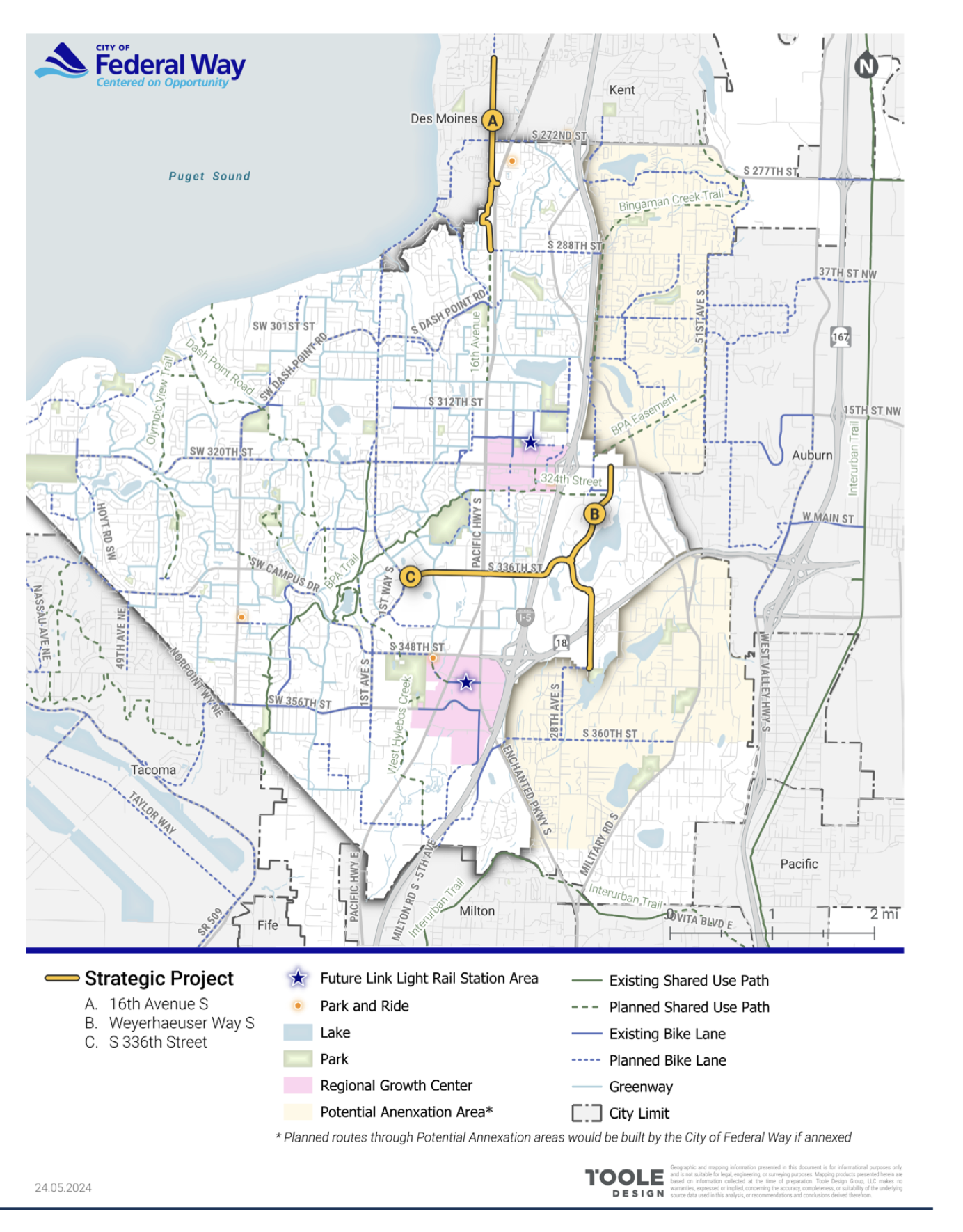
Ahead of the public hearing, I submitted comments on how the possible increased truck traffic on S 336th St. will impact the safety of pedestrians and cyclists as well as impact the feasibility of future Southwest King County Trail Plans to use S 336th St. as a link between the BPA Trail and other connections to the Interurban Trail.

At the hearing, the City and developer said my concerns were introduced too late in the already nine year approval process for new mitigation conditions to be considered. The hearing examiner partially agreed, but he did add a few new additional conditions that are wins for non-motorized street users in the area.

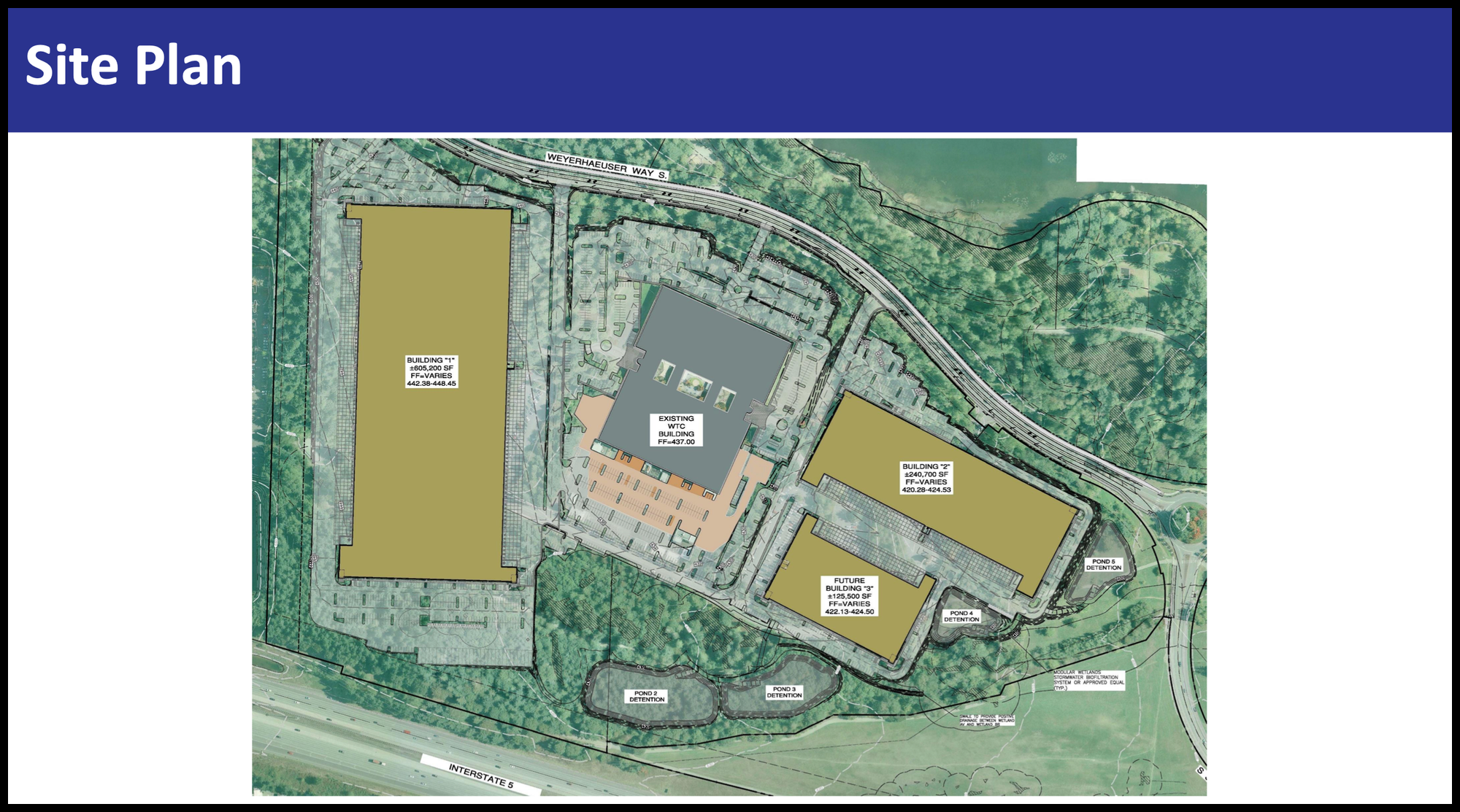
Development site plan with locations of the new warehouses pictured.

What the project already required

Before the hearing, the project carried 37 city staff-recommended conditions plus mitigation measures from the SEPA environmental review. The ones below are the ones that matter most for people who walk, bike, and drive in this part of the city:

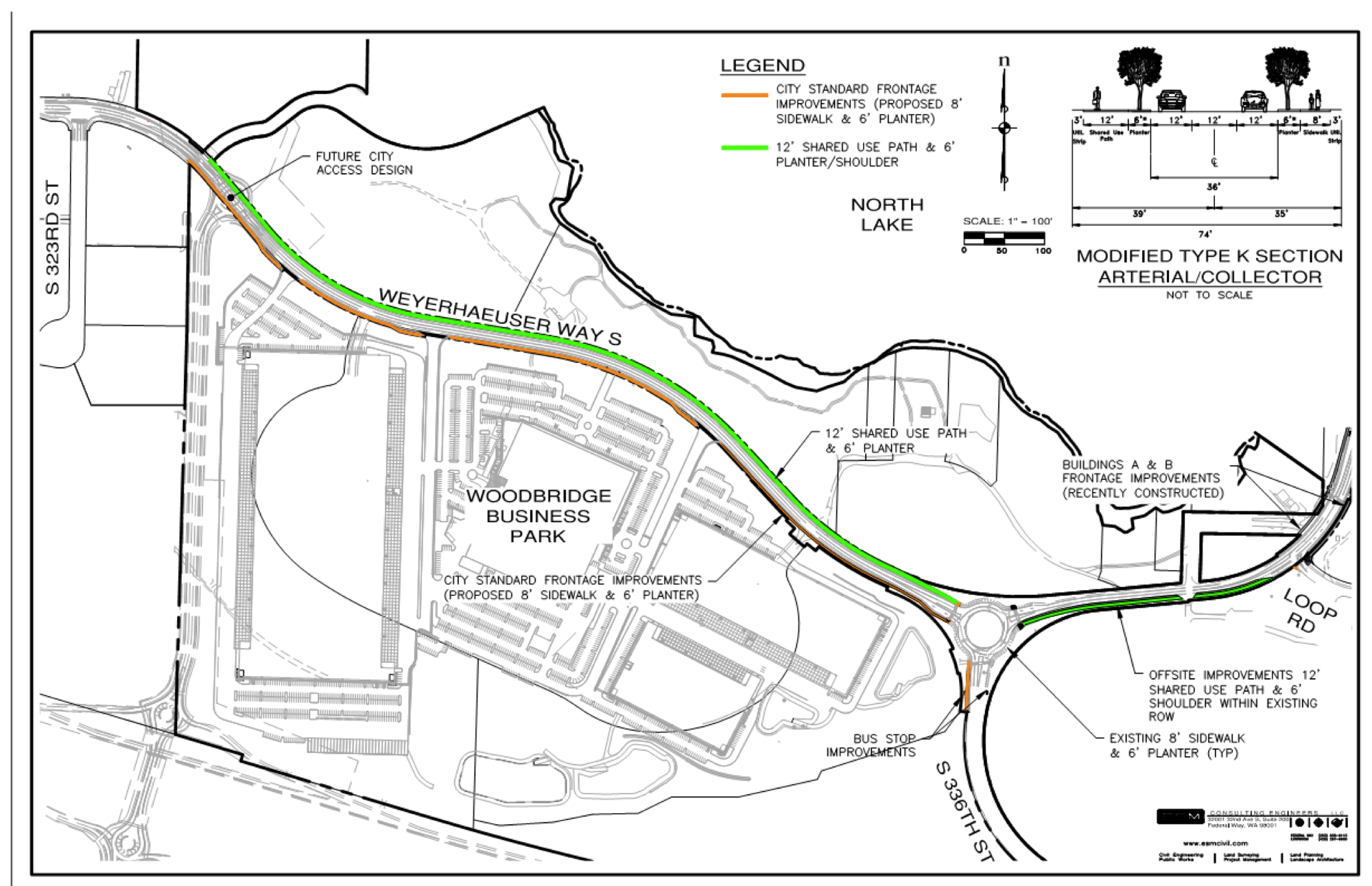
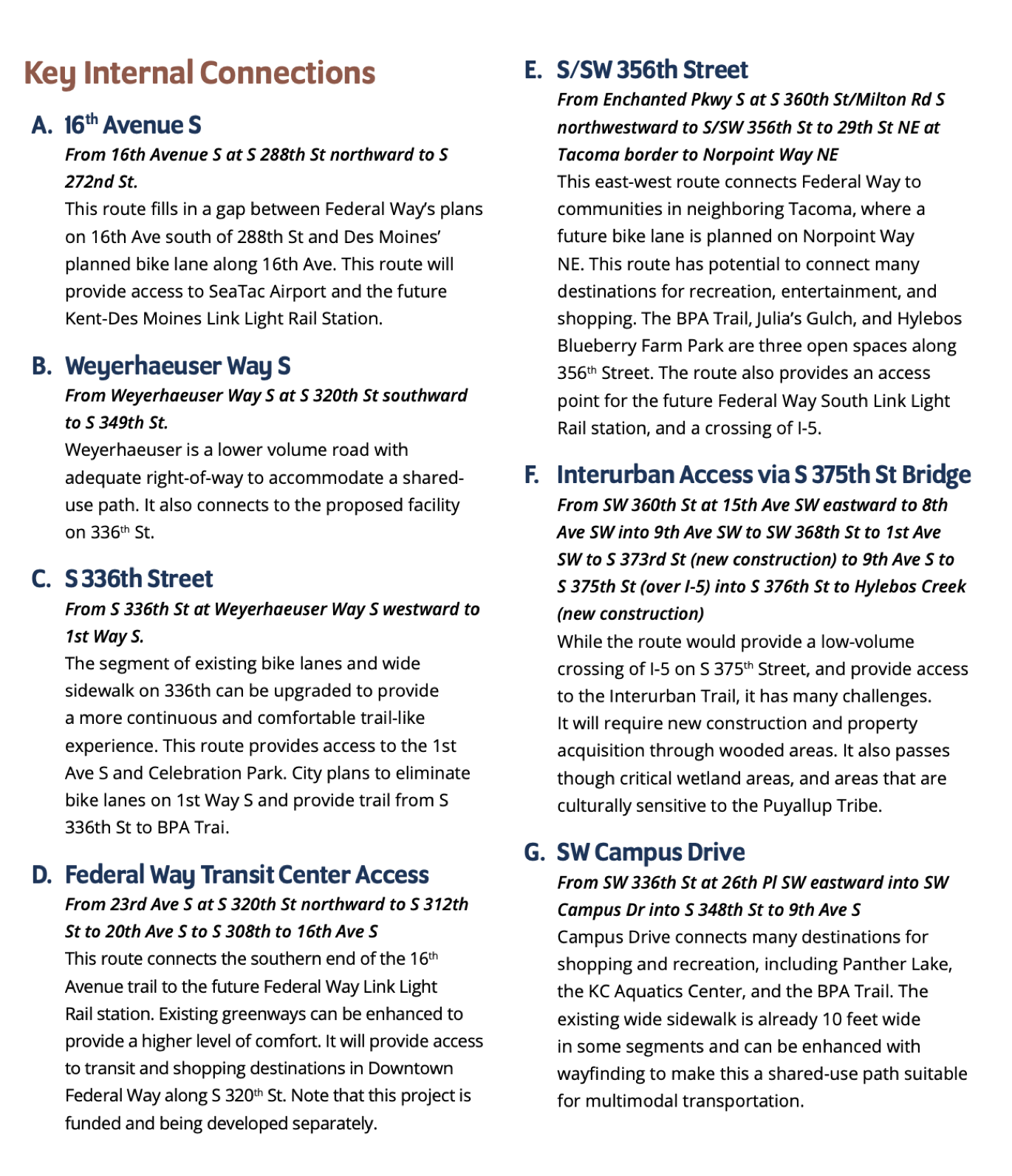
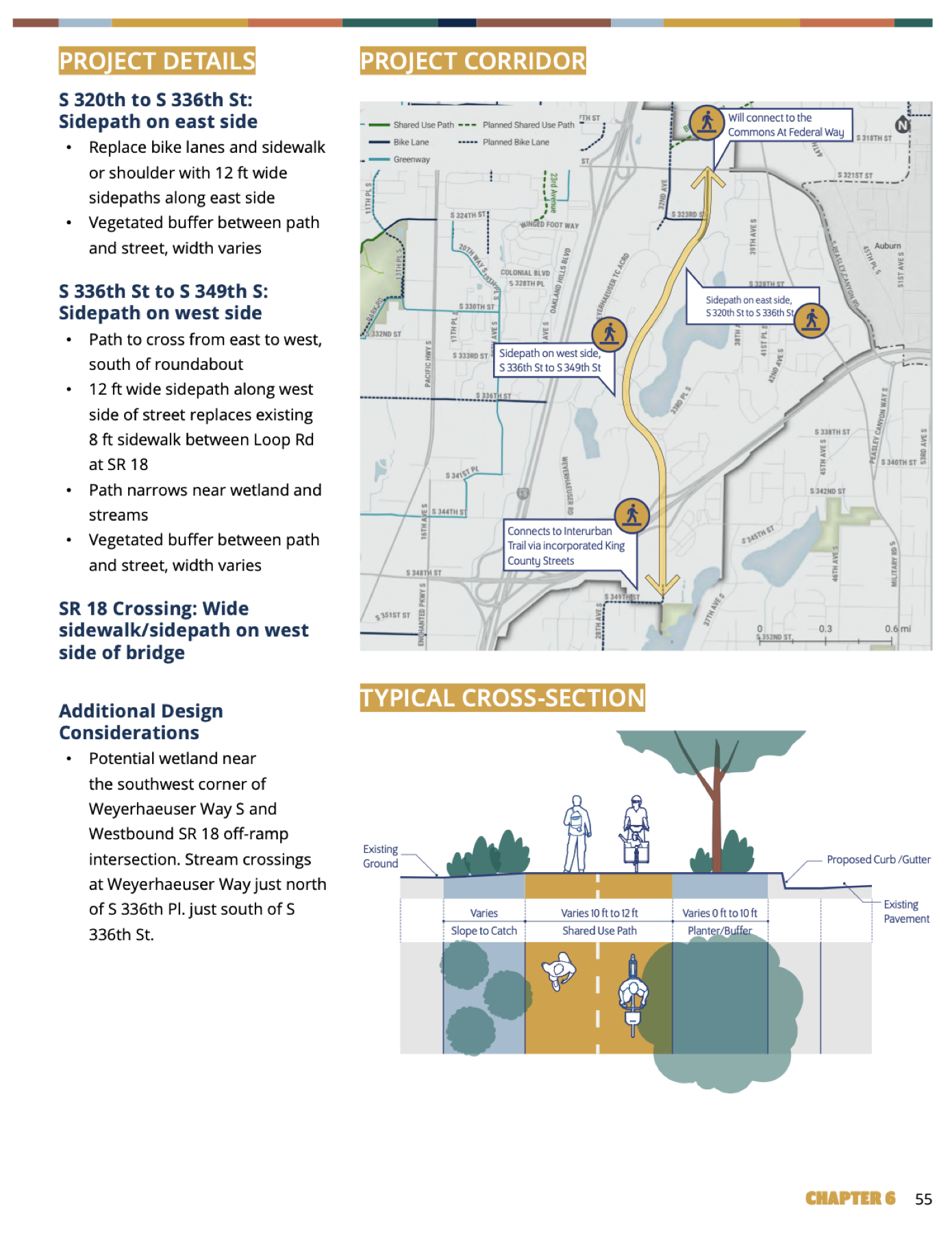
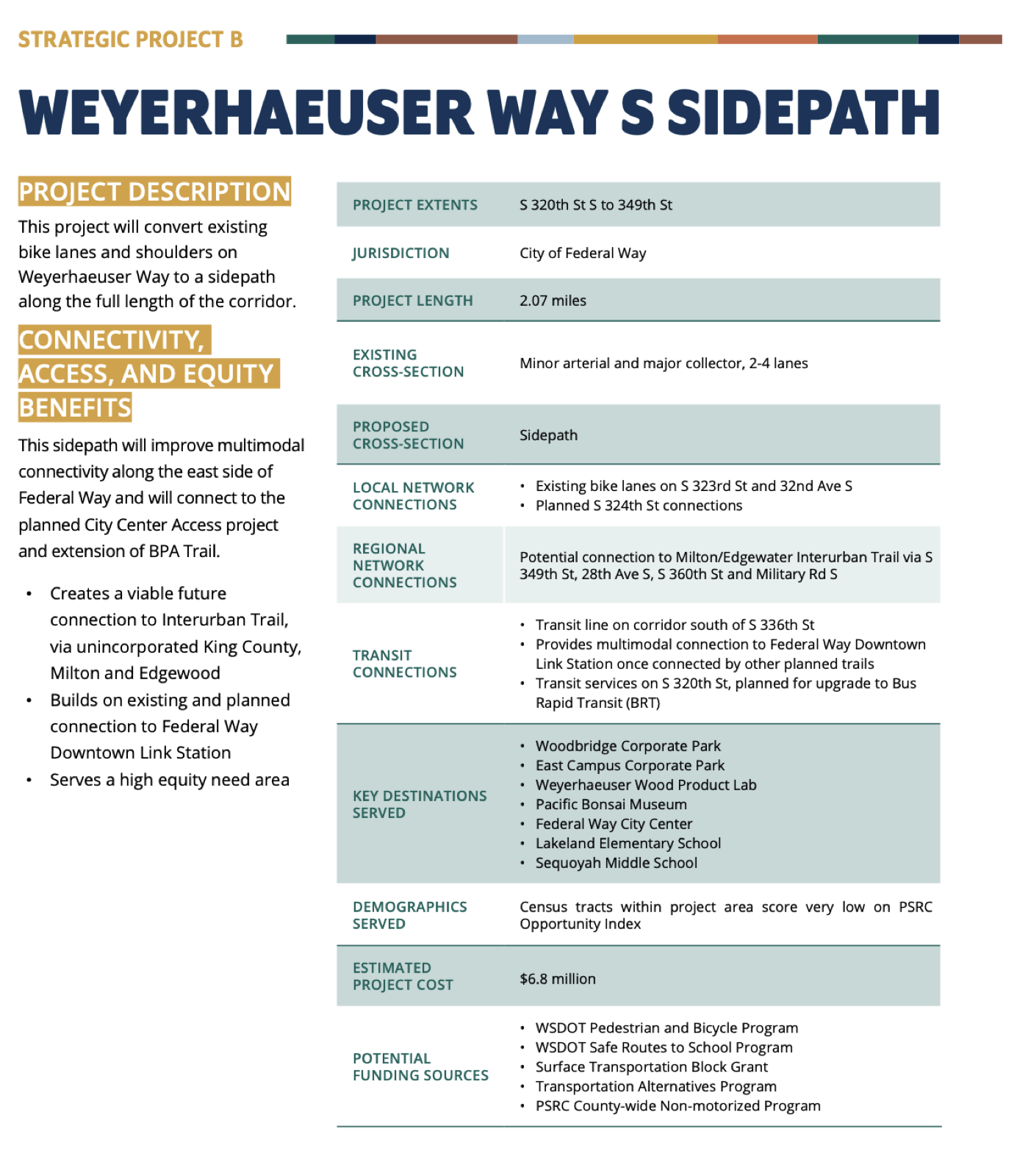
  • Weyerhaeuser Way gets rebuilt with new non-motorized improvements. The developer must dedicate right of way and rebuild Weyerhaeuser Way S. to Principal Collector standards. For people walking and rolling, that means an eight foot sidewalk on the west side of the street and a 12 foot non-motorized path on the east side. The 12 foot path continues from the roundabout at S 336th St, crosses to the west side of Weyerhaeuser Way with upgraded crosswalks, and extends south to connect with the existing sidewalk near the newly built warehouses at 33rd Pl S. The sidewalk will extend west to the project property line on S 336th St., and the Weyerhaeuser Way / S 336th St. roundabout must be designed to meet accessibility standards.
  • A pavement bond for S 336th St. The developer's traffic study claimed no project trucks would use S. 336th St. west of the site. This route is the quickest access to Pacific Highway S., and if you've been near the I-5 and SR 18 interchange during rush hour, it will be a very attractive alternative route. The City raised doubt on that assurance from the traffic study and added truck monitoring and repaving conditions since drivers coming from the Port of Tacoma have a strong incentive to cut over on SR 99 and S 336th St. when I-5 backs up. The conditions they added were to require the developer to post a bond for 120% of the cost to rebuild the pavement on S 336th St. from Pacific Highway S (SR 99) to the Weyerhaeuser Way roundabout should trucks associated with the warehouse development use the street.
  • A 70 truck trip trigger. If monitoring shows project trucks exceeding 70 trips per week on S 336th St. west of the site, the city can call the 120% bond from the developer to rebuild the pavement.
  • Signage and driver education prohibiting trucks from the new warehouses from using S 336th St. west of Weyerhaeuser Way.

The city's arguments for S 336th St. were primarily concerned with impacts to the street pavement if trucks use the street. Trucks are heavy, and heavy vehicles have a big impact on pavement, so their condition was to monitor for this potential. To be fair, the cost to rebuild would be a significant burden for the city to bear and this should be a condition.

Safety concerns unaddressed

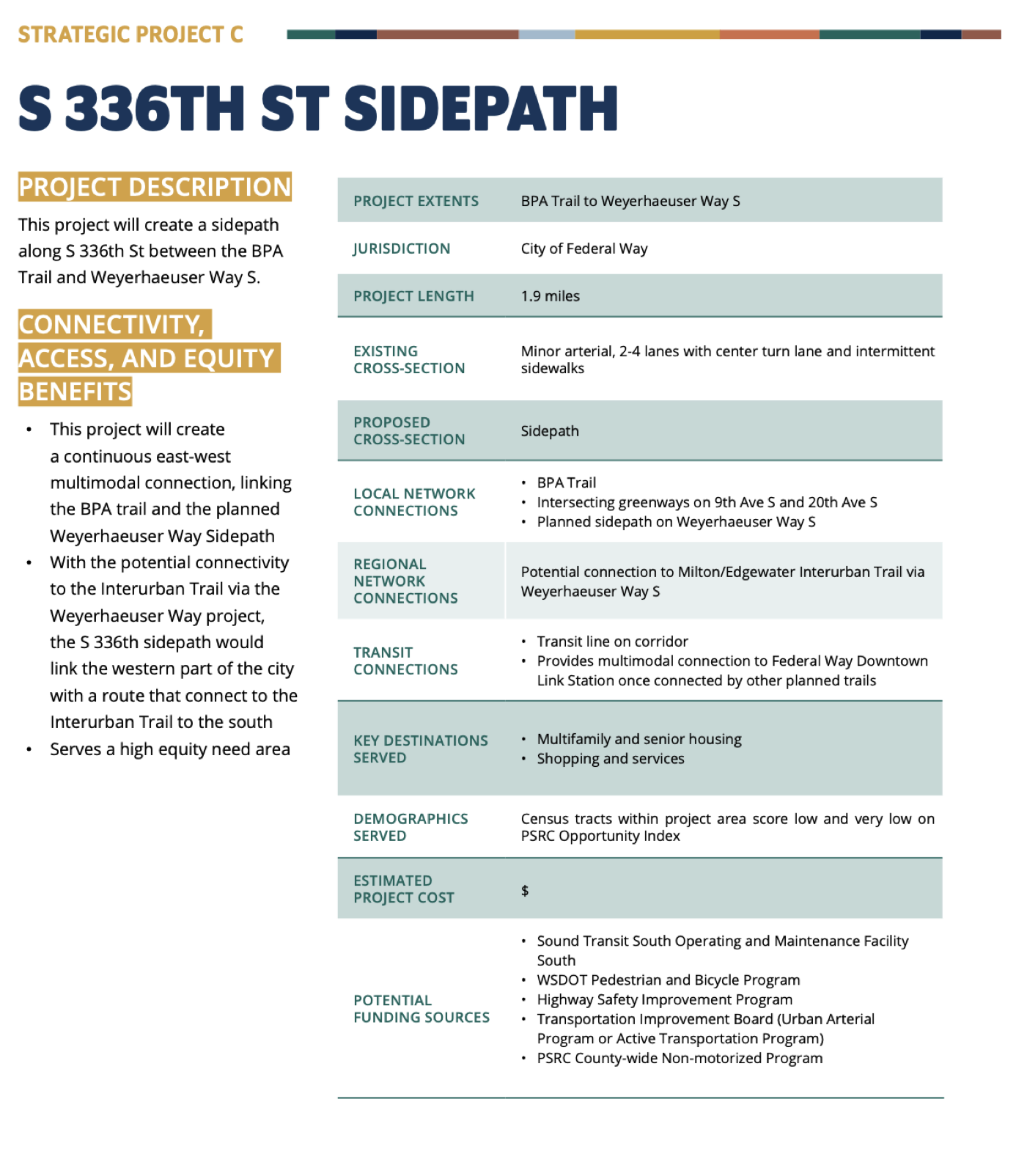
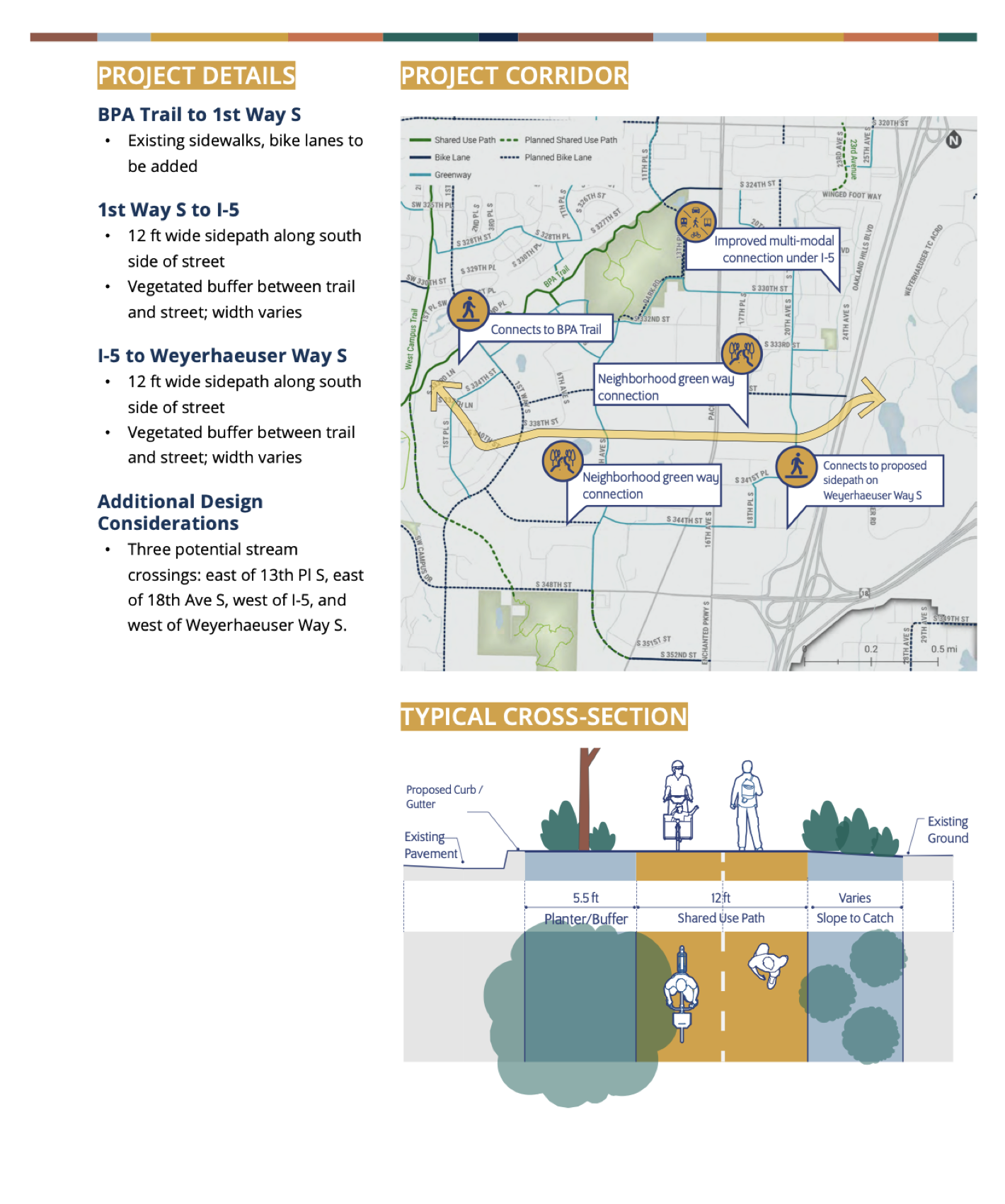
What the SEPA review and the city's arguments didn't address are the safety impacts of this potential added truck traffic on S 336th St. It also didn't list that S 336th St. is the city's own designated cycling route to cross I-5, and that the city has a significant future vision for this street as part of its Southwest King County Regional Trails Plan. That plan envisions a sidepath would be added to S 336th St. making it easier and safer for non-motorized users to go east-west in the city as well as connect the BPA trail to connection points east to the Interurban trail.

As mentioned in my comment to the hearing examiner, people on foot and on bikes are much more likely to be killed when the vehicle that hits them is a large truck rather than a car. Tragically, two of the three cyclists killed since December on Seattle streets were struck by drivers of large commercial vehicles.

If the 70 truck threshold is reached by trucks associated with the warehouses, the developer should not only repave S 336th St. but mitigate the safety impacts of this increased truck volume.

What I asked for, and what the examiner said

My main point in my submitted comment: if the city believes enough trucks may divert to S 336th St. that it needs a pavement bond and monitoring conditions, then those same trucks are a safety problem for the people walking and biking there, and nothing is addressing that.

The developer, and to some extent the city, argued in post-hearing briefs that those comments were trying to "modify" the SEPA determination, which can't be reopened because it wasn't appealed at the time. The examiner rejected that framing. Permit conditions added under the Process IV criteria (which is the approval process this project took) sit alongside the SEPA conditions; they don't modify them.

The hearing examiner determined that where a specific impact was actually evaluated and mitigated in the SEPA review, it can't be reassessed at the permit stage. Under that test, my concerns about how the 70 trip threshold was determined and the three year monitoring window were ruled off limits.

The examiner found that there was "substantial evidence that increased truck traffic on 336th could result in adverse safety impacts to pedestrians and bicyclists," and that "there is nothing in the record to suggest those safety impacts were considered for 336th."

The new conditions

The examiner added new conditions beyond what staff recommended:

  • Condition 39: Safety improvements on S 336th St. If the pavement bond is triggered and repaving S 336th St. is required, the developer's proportionate share responsibility for bicycle and pedestrian safety improvements must be evaluated and implemented as well.
  • Condition 40: No construction trucks on S 336th St. Most of the conditions concerned post-construction, but construction itself also brings a lot of trucks to the area. The developer must get city approval of a construction haul plan that prohibits construction trucks from using S. 336th St. This was one of the measures the developer volunteered to accept during the hearing process.
  • Condition 41: The developer pays for truck monitoring. The truck trip monitoring on S 336th St. must be funded by the developer.

To summarize, the overall project was still approved which was all but inevitable at this point in the approval process. These additional conditions are minor in the grand scheme of things if they even get triggered all, but it was a great win to ensure that non-motorized safety was taken into account alongside the S 336th St. conditions imposed for this project.

What happens next

  • Reconsideration. The examiner's rules allow motions for reconsideration limited to legal arguments.
  • Appeal window. The decision can be appealed to superior court under the Land Use Petition Act within 21 days of issuance.
  • Permits and construction. After that comes engineering review, building permits, and construction, each with its own requirements under the 41 conditions now attached to this project.

Read More

Federal Way City Council Knew It Couldn't Stop a Warehouse. It Voted Yes Anyway.

Federal Way City Council Knew It Couldn't Stop a Warehouse. It Voted Yes Anyway.

Land use application documents show that a giant warehouse project was in the works before the Wild Waves closure announcement. As discovered last week, a land use application to turn the Wild Waves property into a 1 million square-foot warehouse after it closes this year has been submitted to

New Pedestrian Safety Projects Planned for Federal Way

New Pedestrian Safety Projects Planned for Federal Way

Other than CM Jack Walsh's comment that natural selection is the fix to unsafe pedestrian crossings, the Land Use and Transportation Committee (LUTC) on May 4 discussed a full agenda of potential pedestrian and other infrastructure projects during its last meeting, including safety improvements to 19th Ave SW

Jack Walsh should not serve as the Federal Way Land Use and Transportation Chair

At this month’s Land Use and Transportation Committee Meeting (LUTC) during a discussion on pedestrians crossing the street not at a marked crosswalk, Federal Way Council Member and current LUTC Chair Jack Walsh interjected to quip, "It's frustrating. If you follow Darwinian theory, it may take

Building Community